






Something is happening among Europe’s younger generation.
From Paris and Rome to Athens, Brussels, Tirana, Lisbon and Madrid, students and other young protesters have taken to the streets over education, housing, living costs, jobs and a growing sense that the political system offers them fewer opportunities while demanding more from them.
This is not one centrally organized “European student revolution,” and the demands differ sharply from country to country. But the timing — and the similarities — are becoming difficult to ignore.
France has become the epicenter.
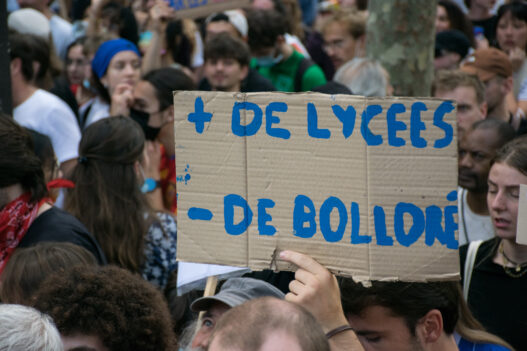
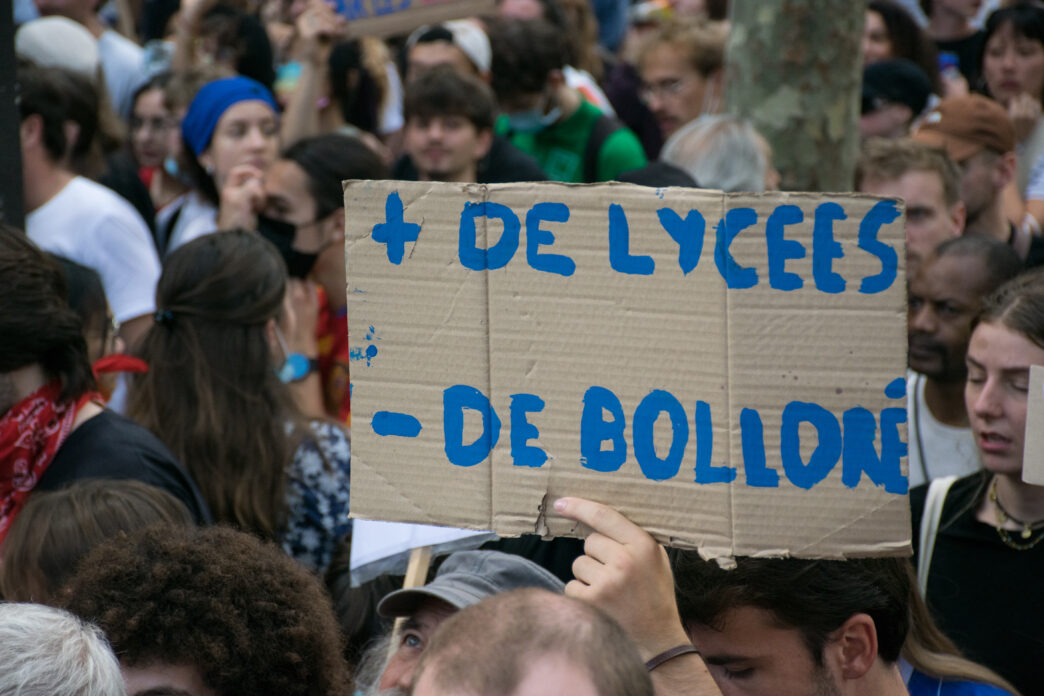
The movement there began in September after students protested deteriorating schools, teacher shortages, overcrowded classrooms, and other education problems. This rapidly spread nationwide, with high schools being blockaded and university students joining demonstrations. According to government figures, Reuters reported that more than 161,000 people participated in demonstrations on October 13 alone.
And then the anger began spilling far beyond the classroom.
France Lit the Fuse
What started as a dispute over education has developed into something much larger.
French demonstrations have increasingly mixed student grievances with anger over the cost of living and government policy. The unrest exploded over the weekend, with looting and clashes accompanying broader anti-government demonstrations.
By Monday, the French government was urging local authorities to consider curfews in areas hit by rioting. Reuters reported more than 2,400 arrests following the weekend violence and nearly 1,000 injured police officers.
That violence should not be confused with every student who initially joined the movement. Peaceful demonstrators, organized political groups, trade unions, and violent agitators have all appeared within an increasingly complicated protest environment.
But France is no longer an isolated story.
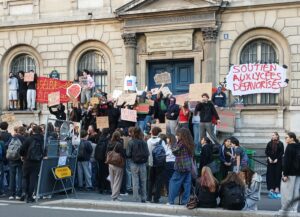
Italy’s Students Challenge Meloni
On October 16, thousands of Italian students marched in cities including Rome, Milan and Turin, protesting the education policies of Prime Minister Giorgia Meloni’s conservative government.
Demonstrators called for greater public-school funding and opposed a government policy limiting the proportion of foreign-origin students in individual classrooms.
The following weekend, separate cost-of-living demonstrations in Milan deteriorated into serious disorder, with masked protesters clashing with police, shops being damaged and fires set near the city center. Reuters Connect
Meloni condemned the violence while defending the right to peaceful protest.
That distinction matters.
Europe is witnessing legitimate economic and educational frustration — but in several cities, those demonstrations are also becoming opportunities for radical groups and vandals to turn political anger into street violence.
Greece: Students Say They Can’t Afford Their Lives
In Athens, students have taken a different approach.
University protesters erected tents near the Greek parliament on October 13, focusing heavily on rent, education expenses and the basic cost of surviving as a student.
One student union president told Reuters that many students are working simply to get by and struggling with rent, food, transportation and education expenses. Another said small apartments around Athens can cost roughly €400 to €500 per month. Reuters Connect
Perhaps more significant was what organizers openly acknowledged: they were watching what was happening elsewhere.
A student leader said Greek demonstrators were joining their voices with young protesters in France and Spain.
That is how separate national protests can begin turning into something broader.
Albania’s Movement Has Become Openly Political
Albania may be the most politically explosive example.
Thousands of young Albanians have demonstrated against university conditions, education costs, limited employment prospects and alleged government corruption.
By October 17, Reuters reported that the student-led movement had entered its fifth day, with demonstrators demanding the resignation of Prime Minister Edi Rama. Clashes between masked protesters and riot police involved rocks, tear gas and water cannons, while hundreds had been detained over several days of unrest. Internazionale
The demonstrations have expanded from complaints about universities into a direct challenge to the government itself.
That is a pattern European political leaders will be watching closely.
Belgium, Spain and Portugal Are Feeling the Pressure Too
Belgian students have protested proposed higher-education reforms and rising costs. Students at Saint-Luc Liège, for example, announced a blockade over reforms including an increase in university registration fees to €1,200.
In Spain, the issue is increasingly housing.
Protesters have demonstrated against evictions and soaring rents, while young activists camped in Madrid’s Puerta del Sol. A 19-year-old student participating in the protest told Reuters that government reforms still did not go far enough.
Portugal is seeing something strikingly similar. Hundreds of young demonstrators camped in Lisbon’s Rossio Square this weekend demanding affordable housing, rent controls and additional public housing.
Different governments. Different political parties. Different immediate causes.
Yet the complaint underneath them keeps sounding familiar:
Young Europeans increasingly believe they are being priced out of the future.
This Doesn’t Fit Neatly Into Left vs. Right
That may be the most important part of the story.
The anger is hitting governments across the ideological map.
Meloni’s right-wing coalition is facing students in Italy. Emmanuel Macron’s government is under pressure in France. Albania’s Socialist government is confronting a youth revolt. Spain’s left-led government has been battered over housing. Greece’s center-right government is facing students angry over affordability.
Meanwhile, in Serbia, a separate student movement that began over allegations of corruption following the deadly 2024 Novi Sad train station canopy collapse has developed into a serious political challenge ahead of the country’s October 25 election. AP News
Trying to explain all of this as simply “the left” or “the right” misses the larger story.
Europe has spent years debating climate targets, migration, wars, defense spending and ideological battles while many young people are asking a much simpler question:
Can I afford an apartment? Can I get a decent job? Does my school actually function? And will my life be better than my parents’ lives?
Increasingly, their answer appears to be no.
That does not justify burning businesses, attacking police or destroying public property.
But governments would be making a serious mistake if they assumed the violence means the underlying grievances can simply be dismissed.
Europe’s streets are sending a warning.
Whether political leaders listen to it – or whether increasingly radical groups succeed in hijacking it — could become one of the continent’s biggest political stories heading into 2027.