






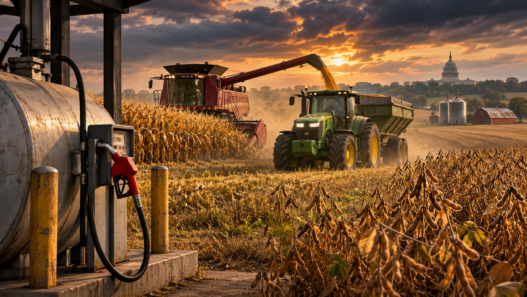
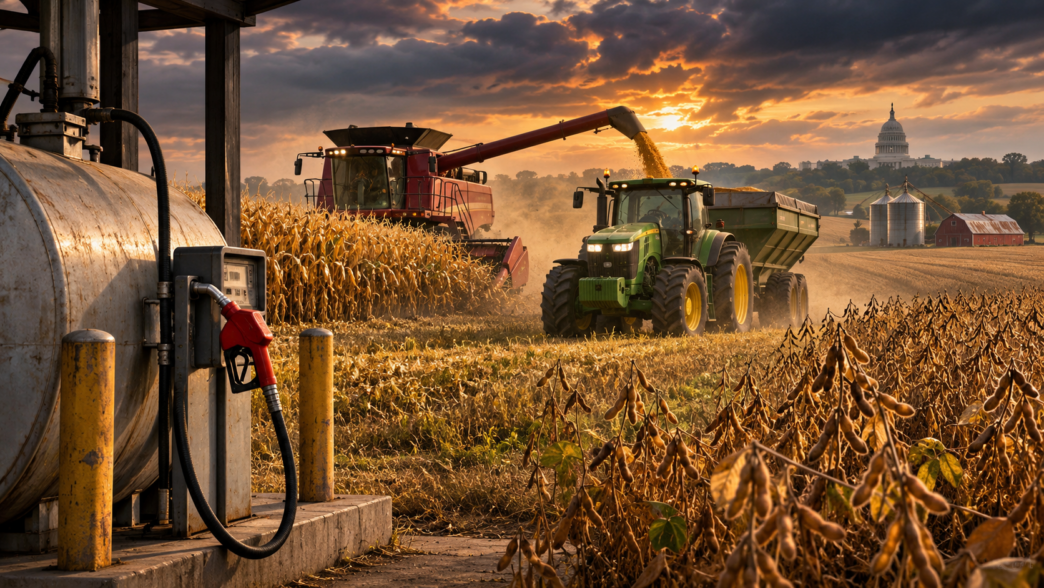
President Donald Trump’s administration is rolling out more than $15 billion in new initiatives and promised support for American farmers, betting that billions in emergency relief can ease the financial squeeze hitting rural America just before voters head to the polls.
The biggest piece is an $8 billion one-time fuel-relief program aimed at farmers hammered by soaring diesel prices. But that is only part of the effort.
The administration has also announced billions in guaranteed loans, conservation payments, fertilizer-production support and other agricultural programs. Separately, the USDA plans another $13.8 billion in existing safety-net payments for eligible producers of crops including corn, soybeans, wheat and rice.
The money may provide badly needed breathing room.
But it also raises a politically uncomfortable question: Why do American farmers need another multibillion-dollar rescue in the first place?
Farm Costs Are Moving in the Wrong Direction
The pressure on farmers is not imaginary.
USDA’s Economic Research Service expects total farm production expenses to climb 4.5% in 2026 to roughly $492.8 billion.
Fuel and oil expenses are forecast to increase by about 28.8%, while spending on fertilizer, lime and soil conditioners is expected to jump roughly 15.3%.
For an industry dependent on tractors, combines, trucks and fertilizer, those increases can erase already-thin margins quickly.
Diesel has become particularly painful. AP reported that the national average had reached about $6.32 per gallon by Friday, roughly 70% higher than a year earlier. Filling a 100-gallon tank costs about $260 more than it did at the same point last year.
And farms can burn through far more than one tank.
The White House has responded with what it calls the Harvest Fuel Relief Program, making up to $8 billion available to offset elevated diesel costs during harvest season.
The administration had already moved in October to provide temporary diesel-tax relief as restricted global fuel supplies pushed prices higher.
This energy problem did not appear overnight. The Untold Report previously examined how turmoil in the Middle East sent oil markets sharply higher and put additional pressure on American fuel prices. Oil Hits Five-Month High as Middle East Conflict Shakes Global Markets
Where the $15 Billion Is Going
According to AP’s breakdown, the recent agriculture commitments include:
- $8 billion in one-time assistance aimed at higher diesel costs.
- At least $5 billion in guaranteed loans for ranchers and fishermen.
- Roughly $1.8 billion for producers and landowners participating in conservation programs.
- About $573 million for fertilizer-manufacturing projects.
- Around $57 million to expand meat-processing capacity.
- $86.6 million in grants for specialty-crop projects.
USDA also announced plans to purchase up to $472.5 million in agricultural commodities, supporting producers while directing food toward charitable programs.
Most of the funding is expected to come through USDA authorities, meaning the administration does not need an immediate new vote from Congress for the bulk of the effort.
That makes it possible to move faster.
It also guarantees that the timing will receive scrutiny.
The Timing Is Impossible to Ignore
The aid push arrives immediately before the November 3 midterm elections, with Republicans trying to protect congressional majorities and several normally comfortable GOP states suddenly looking far less comfortable.
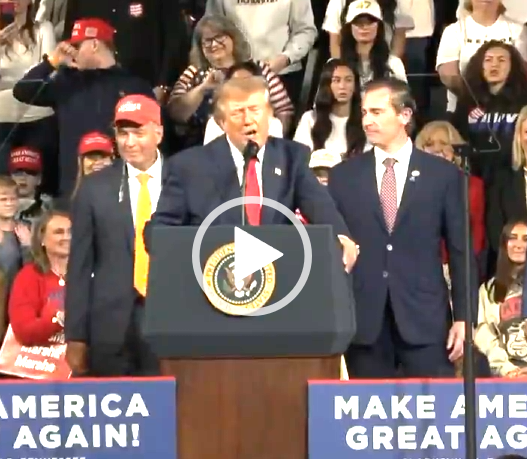
Rural voters have long been a critical part of the Republican coalition. Trump traveled to Iowa and Kansas over the weekend as his party made its final Election Day push.
The Untold Report has already detailed how Republicans are being forced to defend unexpectedly competitive races across states Trump carried comfortably in 2024. Republicans Face Their Biggest Test Yet as America Heads to the Polls
That makes a multibillion-dollar farmer rescue more than an agricultural-policy story.
It is an election story.
The administration can argue — with good reason — that farmers are facing a genuine cost emergency and need help now rather than months from now.
Critics can just as reasonably ask why some of the pressures being offset by taxpayers were aggravated by government policy in the first place.
AP notes that tariffs increased costs for some farm equipment, while trade tensions with China hurt demand for U.S. agricultural exports. Meanwhile, the Iran war and instability surrounding global energy routes have contributed to higher fuel and fertilizer costs.
Some of those forces are outside Washington’s control.
Others are connected directly to choices made in Washington.
That distinction matters.
A Rescue Can Keep Farms Alive — But It Cannot Fix Everything
There is another problem with emergency payments: farmers cannot build a long-term business plan around temporary government checks.
Kansas State University farm management specialist Gregg Ibendahl told AP that the payments could keep some farms profitable this year, but warned that temporary aid does not eliminate the underlying pressures driving costs higher.
That may be the real issue hiding beneath the $15 billion headline.
A farmer deciding whether to plant next spring needs to know more than whether Washington will send another rescue payment. The calculation includes diesel, fertilizer, equipment, commodity prices, export demand, borrowing costs and the possibility of another geopolitical shock.
Farm debt is already under significant pressure. Reuters reported in October that U.S. farm debt had reached a record inflation-adjusted level above $605 billion, while researchers warned that official statistics may even undercount some borrowing through nontraditional lenders.
In other words, Washington can soften the hit.
It cannot simply write a check big enough to make the structural problems disappear.
Rural America Gets Help — and Washington Gets a Political Test
Trump can point to the new assistance as evidence that his administration is responding aggressively to a crisis facing American agriculture.
Farmers receiving thousands of dollars in relief may not care much about arguments over political timing when diesel, fertilizer and debt payments are due now.
But the broader question remains.
If American agriculture requires repeated multibillion-dollar rescue packages simply to remain profitable, policymakers eventually have to confront what is driving the costs instead of repeatedly paying farmers after those costs explode.
For Republicans, that debate could arrive sooner than expected.
Election Day is Tuesday.
And in states where agricultural communities could decide close races, the political verdict on Washington’s handling of the farm economy may be only hours away.