







Britain’s Labour government has approved a major North Sea gas development, reopening a fierce debate over energy security, climate commitments, and the economic realities of moving away from fossil fuels.
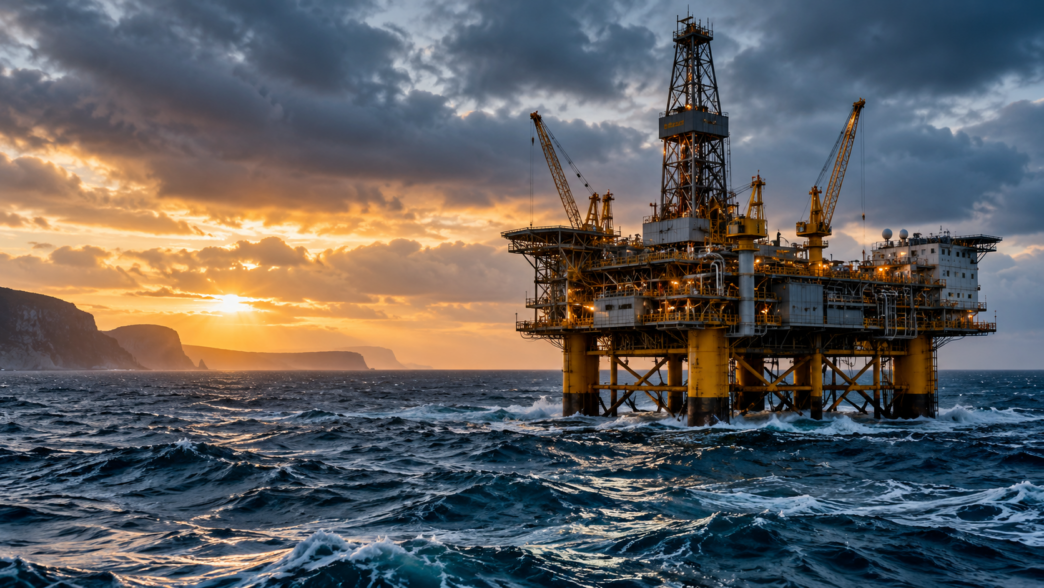
On October 21, the British government gave the green light for natural gas production at the Jackdaw field, located approximately 150 miles east of Aberdeen, Scotland.
The decision comes amid global energy disruptions, rising fuel costs, and renewed pressure on European governments to reduce their dependence on imported energy.
According to the UK government’s official announcement, the project could begin supplying natural gas to British homes and businesses as early as the end of October.
Prime Minister Andy Burnham welcomed the approval, describing his government’s approach to North Sea energy as pragmatic.
But environmental activists see the decision differently.
For them, it represents a retreat from Labour’s climate commitments.
For supporters of domestic energy development, it demonstrates why fossil fuels remain difficult to replace, even for governments committed to ambitious climate targets.
And at the center of the controversy is a question Britain can no longer avoid: How does a country reduce its reliance on fossil fuels while still depending on them to keep homes warm and businesses operating?
What Is the Jackdaw Gas Project?
The Jackdaw field is a major offshore natural gas development in the British North Sea.
The project was originally approved under the previous Conservative government before becoming entangled in legal disputes over its environmental impact.
In 2024, a UK Supreme Court ruling in a separate case established that environmental assessments must consider the emissions produced when extracted oil and gas are eventually burned.
That ruling affected existing North Sea developments, including Jackdaw.
Following revised environmental assessments and public consultations, the Labour government has now authorized production.
According to an official statement to the UK Parliament, Jackdaw is expected to increase domestic gas production by approximately 6% at its peak.
The government also estimates that the project could:
- Support British energy supplies for up to 11 years.
- Protect hundreds of jobs.
- Contribute billions of pounds to the UK economy.
- Reduce reliance on some imported natural gas.
These are government projections, not guaranteed economic outcomes.
Nevertheless, they explain why Jackdaw has become an important part of Britain’s wider energy debate.
Labour’s Climate Promise Meets the Reality of Energy Demand
The political controversy surrounding Jackdaw is particularly significant because Labour entered government promising a different direction for Britain’s energy industry.
Its 2024 election manifesto committed the party to ending new oil and gas exploration licenses in the North Sea.
The Jackdaw approval does not technically break that commitment because the field already held a license.
But the distinction has done little to satisfy environmental campaigners.
As The Guardian reported on October 21, the government’s decision angered climate activists and some Labour lawmakers who had hoped the project would be rejected.
The government maintains that approving production from an existing licensed field is compatible with its policy of refusing new exploration licenses.
That is the central political tension.
Labour remains committed to achieving net-zero greenhouse gas emissions by 2050.
At the same time, it acknowledges that Britain will continue needing oil and gas for decades.
During the government’s official announcement, Energy Secretary Miatta Fahnbulleh defended the decision, arguing that domestic natural gas can strengthen energy security while Britain expands renewable and nuclear power.
She also maintained that the approval is consistent with the country’s legally binding climate commitments.
The government’s position reflects a broader challenge facing European policymakers: cutting fossil fuel emissions without creating additional risks to energy affordability and supply.
Environmental Groups Accuse the Government of Backtracking
Environmental organizations reacted sharply to the announcement.
Campaigners gathered outside Britain’s Department for Energy Security and Net Zero on October 21, urging officials to reverse the Jackdaw decision and reject the proposed Rosebank oil project.
According to Democracy Now!’s October 22 coverage, Robin Wells, director of Fossil Free London, accused the government of favoring the interests of petroleum companies over the public.
Environmental campaigners argue that approving additional fossil fuel production risks extending Britain’s dependence on carbon-intensive energy.
They also question whether the economic and energy-security benefits justify the emissions associated with extracting and ultimately burning the gas.
Those concerns are not simply political rhetoric.
Natural gas produces carbon dioxide when burned, and methane emissions associated with gas production and transportation can contribute significantly to global warming.
However, supporters of domestic production argue that replacing certain imported fuels with locally produced gas could reduce some transportation-related emissions and improve supply security.
The environmental outcome depends on factors including production emissions, methane leakage, displaced imports, and whether the gas increases total fossil fuel consumption.
The Middle East Conflict Changes the Energy Debate
The timing of Britain’s decision is especially important.
Global energy markets have been shaken by the Iran war and disruptions affecting Middle Eastern energy production and shipping.
These developments have highlighted the vulnerability of countries that depend heavily on imported fuel.
Britain is not immune.
While the country has expanded renewable electricity generation, natural gas remains important for residential heating, electricity production, and industrial activity.
Supply disruptions elsewhere can influence British wholesale gas prices, even when the country produces some of its own fuel.
As Agence France-Presse reported, the government presented Jackdaw as a way to strengthen energy security amid price shocks linked to the Iran war.
But there’s an important distinction.
Producing more gas domestically does not automatically guarantee cheaper energy bills.
Natural gas prices are influenced by international markets, supply contracts, domestic infrastructure, taxation, and demand.
Additional British production could reduce some exposure to imports without completely insulating households from international price increases.
That is why the government’s economic claims deserve scrutiny alongside the environmental concerns.
The question is not merely whether Britain can extract more gas.
It’s how much difference that gas will make to household costs and long-term energy security.
A £2 Billion Fund Adds Another Dimension
Alongside the Jackdaw approval, the British government announced plans for a new Energy Wealth Fund.
According to the official government statement, Chancellor-led plans include an initial £2 billion commitment intended to help redirect revenues associated with North Sea energy production toward Britain’s transition to cleaner energy.
The government says this approach will allow Britain to benefit from existing fossil fuel resources while investing in the technologies intended to replace them.
Supporters view the strategy as a way to reconcile energy production with long-term decarbonization.
Critics question whether continued fossil fuel development could undermine that transition.
The effectiveness of the fund will depend on its final design, how money is allocated, and whether investments produce measurable results.
Rosebank Could Be the Next Major Test
The Jackdaw decision may not be the end of Britain’s North Sea controversy.
Attention is now turning to Rosebank, a separate oil development west of the Shetland Islands.
The project has faced similar legal and environmental challenges.
As ITV News reported, the government is considering Rosebank separately, with Energy Secretary Miatta Fahnbulleh indicating that a decision will take longer.
Approving Jackdaw does not guarantee approval for Rosebank.
The two projects involve different resources, development plans, and environmental assessments.
Still, the Jackdaw decision illustrates the difficult policy choices confronting Britain.
The government wants to reduce emissions and accelerate renewable energy deployment.
It also wants to support workers, protect energy supplies, and limit exposure to overseas disruptions.
Those objectives are not always easy to reconcile.
For now, Jackdaw has received the approval needed to begin producing gas, potentially within days.
The next questions are whether its projected benefits materialize, how environmental groups respond, and whether the government applies similar reasoning when it makes its decision on Rosebank.