







Oil markets are flashing another warning sign from the Middle East – and American drivers may eventually feel it at the pump.
Brent crude, the global oil benchmark, surged 4% on Thursday, October 22, settling at $113.17 per barrel, its highest closing level in more than five months. U.S. West Texas Intermediate climbed 2.4% to $99.47 per barrel as renewed attacks in Saudi Arabia revived fears that the region’s energy supply routes could face another serious disruption.
According to Reuters’ October 22 report, escalating attacks involving Yemen’s Iran-aligned Houthis have intensified concerns over the security of Saudi Arabia’s oil infrastructure.
Saudi Aramco, the kingdom’s state energy giant, instructed employees to evacuate its headquarters in Dhahran as regional tensions escalated.
But the bigger story isn’t simply where oil is trading today.
It’s what markets appear to be afraid could happen next.
The Strange Part: Oil Is Still Flowing
Here’s what makes the latest price surge especially notable.
Middle Eastern oil exports have actually been recovering.
Reuters reported that Morgan Stanley analysts estimated regional crude exports at roughly 17 million barrels per day last week, compared with approximately 18 million barrels per day before the Iran war.
In other words, traders are not simply reacting to a massive new shortage that has already happened.
They’re paying a premium because they don’t trust the recovery to last.
That’s a crucial distinction.
Oil markets routinely move before physical supplies disappear. If traders believe tankers, pipelines, export terminals, or major production facilities could become harder to operate, prices can jump long before gasoline stations run short of fuel.
In a separate analysis titled Energy Watch: New Abnormal, Reuters examined how oil prices have continued climbing despite recovering export volumes.
The disconnect suggests traders increasingly doubt that current supply levels can withstand another major escalation.
Why the Strait of Hormuz Still Matters
The world’s energy system remains unusually exposed to a narrow stretch of water most Americans will never see.
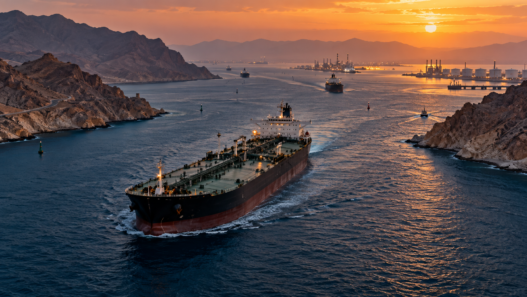
The Strait of Hormuz connects the Persian Gulf with international shipping routes, making it one of the most strategically important waterways in global energy trade.
Before the current Middle East crisis, approximately 20 million barrels of crude oil and petroleum products passed through the strait daily, representing roughly one-fifth of worldwide oil consumption.
The International Energy Agency (IEA) has highlighted the extraordinary importance of the route to international energy security.
There simply aren’t enough alternative pipelines and shipping routes to replace all of that traffic quickly.
According to the IEA’s October 2026 Oil Market Report, flows through the Strait of Hormuz recovered substantially in September, reaching approximately 10.9 million barrels per day.
However, the agency warned that renewed attacks on regional energy infrastructure and tanker traffic threaten to undermine further recovery.
That’s why attacks thousands of miles from the United States can still matter in Texas, Ohio, or Florida.
Oil is traded globally. A serious disruption in the Persian Gulf doesn’t stay in the Persian Gulf.
American Drivers Are Already Paying More
For Americans, this isn’t an abstract Wall Street story.
According to the latest figures from the U.S. Energy Information Administration, the national average price for regular gasoline stood at approximately $4.28 per gallon on October 19.
That’s about $1.27 more per gallon than a year earlier, even though average gasoline prices had declined slightly from the previous week.
The same government data showed average on-highway diesel prices had reached approximately $6.28 per gallon.
And that matters far beyond the gas station.
Higher diesel prices increase the cost of trucking.
Trucking affects food and retail distribution.
Jet fuel affects airlines.
Petroleum is also used throughout manufacturing, chemicals, plastics, and packaging.
That means an oil shock can quietly spread through the broader economy long after the initial market headline disappears.
The Inflation Problem Nobody Can Ignore
The International Energy Agency is already warning that elevated energy prices are damaging economic activity.
Its October Oil Market Report said the Iran war has contributed to restricted fuel availability, rising energy costs, and a deteriorating global economic outlook.
Diesel markets remain particularly strained.
On October 15, the IEA Governing Board reaffirmed its commitment to global energy security and called for accelerated releases of emergency oil reserves, including diesel supplies.
That is where the current Middle East conflict becomes a much bigger economic story.
Governments and central banks can influence interest rates, taxes, and domestic spending.
They cannot easily manufacture millions of replacement barrels of Middle Eastern oil if a major shipping route suddenly closes.
And while the United States produces enormous amounts of oil itself, American consumers still purchase fuel in a market connected to global prices.
Domestic production provides protection.
It does not create complete immunity.
The Market Is Pricing Fear – For Now
There is also an important reason not to panic.
A higher oil price does not automatically mean a catastrophic shortage is coming.
Middle Eastern exports have recovered significantly, and as long as major shipping routes remain operational and energy infrastructure continues functioning, some of the geopolitical risk premium in oil prices could eventually fade.
That’s the optimistic scenario.
The alternative is considerably more expensive.
Another serious attack on Saudi oil infrastructure, a disruption around the Strait of Hormuz, or sustained interference with commercial tanker traffic could turn today’s fear-driven rally into a genuine physical supply problem.
The situation has already become serious enough for Washington to take additional precautions.
According to Reuters’ reporting on October 21, the United States ordered nonessential diplomatic personnel and eligible family members to leave its missions in Saudi Arabia amid escalating security threats.
The move underscores how quickly the regional crisis has expanded beyond energy markets.
And that is the real significance of oil pushing above $113.
The market isn’t just calculating how many barrels are available today.
It’s calculating the possibility that tomorrow’s barrels may be much harder – and much more expensive – to move.
For American consumers already facing gasoline above $4 a gallon nationally, that’s a risk worth watching.