







President Donald Trump just launched one of his sharpest attacks yet on Obamacare — and this time, Republicans have some ugly numbers to point to.
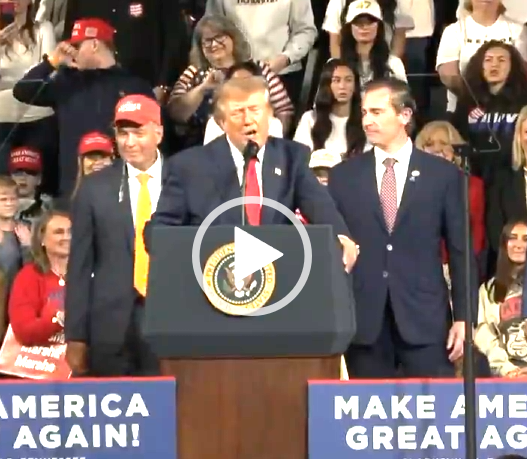
Speaking Monday night at a campaign rally in Grand Island, Nebraska, Trump hammered the Affordable Care Act while discussing his administration’s broader crackdown on government fraud.
“Obamacare’s a total fraud. It’s crappy health insurance for massive amounts of money.”
Trump also accused shady insurance brokers of collecting commissions while improperly enrolling people into taxpayer-subsidized plans. The remarks came as the administration says it has uncovered more than $260 billion in fraud across federal programs since January 2025.
The language was pure Trump.
But the Obamacare fraud problem he was talking about isn’t hypothetical.
Obamacare Fraud Crackdown Hits 760,000 People
In September, the Centers for Medicare & Medicaid Services announced that approximately 315,000 unauthorized Obamacare enrollments covering more than 760,000 people had been canceled.
CMS said those enrollments were confirmed as unauthorized after reviews conducted with health insurance companies.
The expected taxpayer savings?
About $2.2 billion in federal premium subsidies.
That is not a rounding error.
CMS also issued 569 notices of intent to terminate agreements with agents and brokers who submitted 2026 applications without key identifying information, including Social Security numbers. The agency says newly registered brokers were significantly more likely to be connected to enrollments with unresolved income, citizenship and identification problems.
Vice President JD Vance, who chairs Trump’s Task Force to Eliminate Fraud, said another roughly 419,000 people were being subjected to additional eligibility verification, including checks involving legal residency and income requirements.
Vance described the underlying setup bluntly: brokers had financial incentives to enroll people while eligibility safeguards had been weakened.
“What do you have?” Vance asked during the September announcement. “Of course, rampant, rampant fraud.”
That gets to the question Obamacare defenders would rather not linger on:
How did hundreds of thousands of unauthorized enrollments make it through the system in the first place?
The Broker Incentive Problem
The structure identified by CMS is particularly difficult to brush aside as partisan rhetoric.
Insurance agents and brokers can be compensated for enrolling consumers in marketplace coverage. That is not inherently improper.
But combine financial incentives with weak identity verification and taxpayer-funded premium subsidies, and the potential for abuse becomes obvious.
CMS says the newest group of brokers was 2.7 times more likely to submit enrollments missing Social Security numbers and 2.6 times more likely to have unresolved citizenship or immigration-status verification problems than brokers who had registered before 2026.
The agency has now imposed a temporary moratorium on certain new broker registrations and is requiring stronger identity verification and electronic consumer authorization.
Those are safeguards that raise another uncomfortable question: Why weren’t they sufficiently enforced before billions of taxpayer dollars were put at risk?
And Obamacare Still Has an Affordability Problem
Fraud isn’t Obamacare’s only vulnerability.
Insurers participating in ACA marketplaces have proposed a median 15% premium increase for 2027, according to KFF’s analysis of filings from 276 insurers nationwide. That follows a median finalized increase of 20% for 2026.
To be clear, those increases cannot simply be blamed on fraud. KFF says rising medical prices remain the primary driver, alongside inflation, labor costs, the expiration of enhanced premium tax credits and changes in the insurance risk pool.
But politically, that distinction may be cold comfort to Americans staring at higher insurance bills from something literally named the Affordable Care Act.
Obamacare’s defenders can point — correctly — to people who receive coverage through the exchanges and to protections the law established.
That doesn’t erase the program-integrity problem now sitting in plain sight.
A federal system capable of spending roughly $2.2 billion subsidizing more than 760,000 enrollments later determined by CMS to be unauthorized deserves serious scrutiny.
Republicans Now Have to Finish the Argument
Trump’s attack gives Republicans an opening. But attacking Obamacare is the easy part.
The harder challenge is showing voters what replaces the broken incentives, inflated costs and federal subsidy machinery without leaving Americans with serious medical conditions stranded.
Trump has increasingly argued that federal healthcare money should flow more directly to consumers rather than through insurance companies, while also pushing greater price transparency and lower prescription-drug costs.
If Republicans want another serious Obamacare fight, the fraud crackdown gives them potent ammunition.
Because after more than 760,000 unauthorized enrollments and billions in questionable subsidy payments, Democrats can’t simply answer every criticism with the old refrain that Republicans want to “take away healthcare.”
The federal government’s own numbers now show something went badly wrong inside the system.
The real debate is no longer whether Obamacare has a fraud problem.
It is how much deeper that problem goes — and why taxpayers were paying for it for so long.