






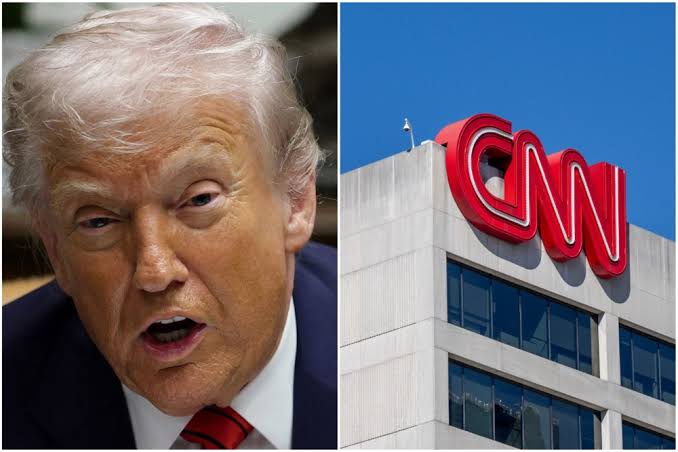
CNN wants Americans to believe Donald Trump is obsessed with attacking the press.
But in a recent piece making exactly that argument, the network managed to create a credibility problem of its own: CNN’s description of Trump’s TIME interview does not match the actual transcript.
In an October 1 analysis, CNN media reporter Brian Stelter wrote that Trump’s interview with TIME “begins and ends with Trump’s complaints about the media,” using that framing to portray the president as consumed by his press coverage.
There’s just one problem.
That is not how the interview begins.
The published transcript starts with questions about Trump’s dinner with an AI industry figure and his views on AI safety. The next questions continue discussing artificial intelligence and Trump’s meetings with AI leaders.
The question about Trump’s treatment of the press does not appear until later, when TIME asks why Americans should believe he respects a free press while restricting some journalists’ White House access.
That may sound like a small distinction.
It isn’t.
CNN Had the Transcript,So Why Frame It This Way?
Nobody has to speculate about what happened in the interview. The transcript is public.
Trump eventually did unload on the media. He specifically attacked CNN, defended his position on press access and complained about what he sees as relentlessly negative coverage. Near the end of the conversation, he accused the interviewers themselves of asking nothing but negative questions.
Those comments are fair game.
But saying an interview began with Trump complaining about the press when it actually began with a discussion about artificial intelligence is something else.
CNN could have accurately written that complaints about the media became a major theme of the interview.
Instead, the network used a cleaner, more dramatic narrative: Trump supposedly opened and closed the conversation fixated on the press.
The transcript tells a more complicated story.
And this is exactly the kind of thing that fuels the “fake news” accusation CNN has spent years insisting is unfair.
Not necessarily because every sentence on CNN is fabricated. That is not what media bias usually looks like.
It often happens through selection, emphasis and framing — which facts get elevated, which details disappear and which narrative readers are handed before they ever examine the underlying material themselves.
Trump’s Fight With CNN Is Bigger Than One Article
The dispute comes amid an escalating battle between Trump and several major news organizations.
Trump announced in September that CNN, MS NOW and Politico would be barred from White House access, accusing the outlets of years of “FAKE NEWS” coverage. The organizations challenged the restrictions in court, arguing they were being punished over unfavorable reporting.
Whether the White House should be excluding news organizations is a separate and serious First Amendment question.
But CNN is simultaneously asking Americans to view it as a neutral victim of presidential hostility.
That makes accuracy even more important.
If CNN wants to argue that Trump’s attacks on the network are baseless, then CNN probably should not hand him an easily checkable example where its characterization of an interview is contradicted by the transcript sitting in plain sight.
Trump told TIME he believes in a free press but not what he considers “fake news,” and he singled CNN out for criticism.
CNN’s response was essentially to prove how unfair Trump’s criticism was — while publishing a description of the interview that readers can verify was inaccurate.
You couldn’t script the irony much better.
The Real Media Problem Is Framing
The bigger issue is not whether viewers like Trump.
It is whether Americans can trust major news organizations to give them the complete picture instead of constructing the most politically useful version of events.
CNN was correct that Trump repeatedly complained about the media during the TIME interview.
But the interview did not begin that way.
That distinction matters precisely because CNN used the supposed beginning of the interview as evidence for its broader conclusion about Trump.
Readers should not have to track down a 75-minute transcript to discover that the framing they were given was wrong.
And when they do?
CNN shouldn’t be surprised when “fake news” starts sounding less like a slogan and more like a criticism worth examining.